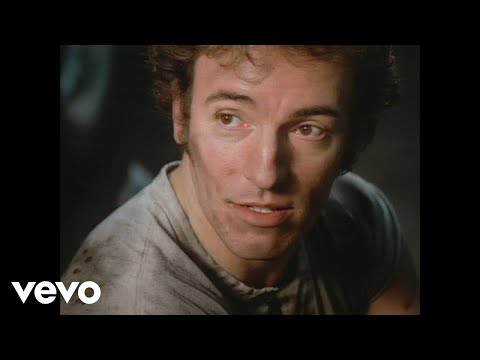
"I'm on Fire" arrives like a whisper in the midst of Bruce Springsteen's Born in the U.S.A. juggernaut - an intimate, nocturnal counterpoint to the album's stadium-sized anthems. Released in 1985 as a single from that album, the song sits oddly but perfectly among songs drenched in synthesizer pop and big-band rock, offering a spare sonic landscape and a voice that sounds as if it were recorded close to a candle. Written by Bruce Springsteen, it quickly became one of the most talked-about tracks from an album already full of hits.
The song was cut during the marathon sessions that produced Born in the U.S.A., when Springsteen and his collaborators were experimenting with a range of styles and textures. Rather than building further on the bright, punching productions that defined much of the record, the sessions that produced this song favored restraint: a taut pulse, subtle keyboards and a hushed vocal. That economy of arrangement is one of the recording's most notable features - the production lets the lyric breathe and makes silence feel as potent as sound.
On record the performance feels like a private confession. Springsteen's vocal is close-miked and almost conversational; small inflections and a controlled vulnerability carry the narrative. There are moments in the recording where space becomes an instrument itself - the slight motoric thrum under the verse, a brief atmospheric keyboard figure, a muted guitar - all of it creating the sense of a car idling in the dark or a living room light left on for no good reason. Those choices turn the song into an interior vignette rather than a full-throated declaration.
Lyrically, "I'm on Fire" trades in ambiguity and simmering longing. The narrator watches someone sleeping and admits a desire that is both yearning and edged with unease. Read as a straightforward love song, its tension comes from the mismatch between desire and action; the speaker is "on fire" but also hesitant, circling the object of his affection instead of closing the distance. Read more darkly, the same lines can take on stalkerish overtones, or suggest a sense of self-directed frustration and frustration with small-town dead ends that crops up elsewhere in Springsteen's work. That duality - tenderness and unease - is what keeps the song combustible and why listeners continue to return to its lines, searching for what it will finally reveal.
Beyond interpretation, the song has had a quiet cultural life. Released as a single, it traveled beyond the album and into radio playlists and soundtracks, often used in film and television to underline scenes of longing or late-night revelation. The song's simplicity lends itself to dramatic underscores: it can amplify a moment of domestic tension or render a brief emotional beat unforgettable. That versatility is part of its staying power.
An interesting footnote to the song's history is the way other artists have approached it. Johnny Cash recorded a notable cover that stripped the song down even further, reframing its longing through the gravity of his voice and decades of lived experience. That interpretation highlighted how malleable Springsteen's writing can be - the same spare lines can become heartbreak, menace or resigned acceptance depending on the performer.
Part of the song's enduring appeal is its refusal to spell everything out. Springsteen gives you a scenario - a late-night watch, a confession of heat and hunger - and then steps back. That restraint invites listeners to supply the rest: the backstory, the consequences, the small domestic details that make the confession plausible. In that way, "I'm on Fire" functions like a short story rather than a pop single: it opens a private scene and then leaves you to sit with its residue.
Finally, "I'm on Fire" stands as a reminder that Springsteen's best work can be found in the spaces between his better-known personas. The song asks for attention not through volume but through focus; it rewards close listening. In the middle of an album associated with flag-waving choruses and arena-sized riffs, this little, smoldering track insisted that intimacy could be as powerful as bombast - and that a single, well-rendered confession can say more than a thousand speeches.