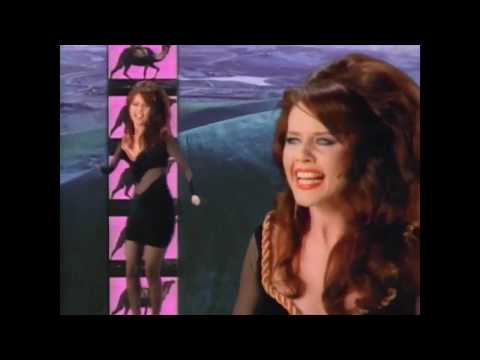
Roam: an anthem of wanderlust
When "Roam" arrived in 1989 on The B-52's album Cosmic Thing, it sounded like a band rediscovering lightness on purpose. Written by the group as a whole and released on the record that marked their return to form after a difficult mid-decade, the song folded the band's signature playfulness into a full-throttle, radio-ready pop groove. Its bouncing rhythm and insistently sunny chorus - "Roam if you want to" - made it feel like an invitation as much as a command.
The circumstances around Cosmic Thing shaped how "Roam" landed. After the death of guitarist Ricky Wilson in 1985, the remaining members regrouped and rebuilt their sound. The material that became "Roam" was created in that atmosphere of renewal: the band writing together, experimenting with layered harmonies, and leaning into arrangements that emphasized melody and openness rather than the sharper, more jagged edges of some earlier work. Keith Strickland's growing role in shaping the music helped steer that evolution, while Kate Pierson and Cindy Wilson's intertwining vocals gave the song its warm, celebratory center.
On record, "Roam" balances a pop polish with touches that keep it distinctively B-52's - little bursts of call-and-response, a playful vocal exclamation here and there, and a keyboard line that mimics brass fanfare without ever sounding heavy. The band recorded with the intention of capturing a communal, almost live feeling: multiple voices layered into the chorus so the listener feels invited into the crowd. Those choices turned a fairly straightforward idea - the joys of travel and curiosity - into something that feels like a small ritual, one you can join by singing along.
Lyrically, "Roam" is deceptively simple but rich in implications. On the surface it is an unabashed paean to moving through the world: urging listeners to roam, to see, to be curious. But the song's insistence on mobility reads as more than tourism; it can be heard as a prescription for personal freedom and emotional rejuvenation. In the context of a band coming back from loss, "roam" becomes a metaphor for keeping alive, for choosing expansion over retreat. The repeating chorus operates like a mantra - sometimes literal, sometimes ironic - that reframes wandering as a way to remain open to life rather than a flight from it.
Vocally, the interplay deepens that meaning. Pierson and Wilson often deliver the melodic warmth while Fred Schneider punctuates with his distinctive spoken-rasp exclamations, creating a contrast between an earnest invitation and a knowing, theatrical aside. That dynamic turns the song into something communal: the band isn't lecturing the listener, they're coaxing them into a shared experience. The repeated hook trades in optimism, but it also leaves space for ambiguity - the kind that drives curiosity rather than mere escapism.
Culturally, "Roam" came to function as one of The B-52's signature pieces, alongside songs like "Love Shack," because it distilled the group's personality into an instantly accessible pop form. Its upbeat message made it a natural fit for celebratory moments, and over the years it has been used to underscore scenes of travel, emancipation, and good-natured adventure in various settings. The song's buoyant surface allowed it to bridge club-friendly choreography and mainstream radio, helping to reintroduce The B-52's to a wider audience at the end of the 1980s.
There are interesting ironies baked into the song's history. A band that once trafficked in quirky, stylized art-pop suddenly offered an anthem that could be sung on the radio and at graduation ceremonies alike. That move toward broad appeal felt like a risk, but it also proved vital: the band emerged from a painful period with a record that celebrated togetherness and motion, and "Roam" encapsulated that healing impulse. Its biggest surprise may be how effortlessly it turns a simple imperative into a feeling both communal and liberating.
Decades on, "Roam" endures because its core message is flexible: it can be a literal call to see the world, an emotional nudge to keep moving after loss, or a joyous reminder that curiosity is a practice. Performed live, it still functions as a moment when audiences join in, voices layered like the original recording. Whether you take "roam" as a travelogue or a philosophy, the song's bright insistence that life is better when you keep exploring remains its most persuasive argument.